
- Introduction
Bride and Prejudice, a 2004 film directed by Gurinder Chadha, is an on-screen adaption of Jane Austen’s classic, literary novel Pride and Prejudice. First published in 1813, the story follows the trials and tribulations of the Bennet family. While the Bennets are considered members of the upper class, the family fortune rests on the marriage of their five daughters. Set in an 19th century England when family pressures and expectations were at an ultimate high, Elizabeth and her sisters must find a worthy husband that will save their family from a life of poverty and embarrassment. Austen’s novel highlights issues of class, pride, morality, family, and marriage. Similarly, Chadha’s adaption aims to do the same, but with a Bollywood twist on the story. The well-known novel and on-screen adaption both act as separate mediums of literary significance. With an emphasis on gender roles and class structures, the story serves as more than just a tale of romance.
- The Book
 Jane Austen’s Pride and Prejudice is a popular work in literature that is often referenced within classroom settings. The novel explores the complexities of balancing conflicting mentalities and relationships between family and love interests. The following infamous line spoken by Mrs. Bennett in Austen’s Pride and Prejudice embodies the courtship narrative that is rendered throughout the novel: “It is truth universally acknowledged, that a single man in possession of a good fortune, must be in want of a wife” (3).
Despite the obviousness of the novel’s title, pride and prejudice are the dominant themes that permeate the story line. As Mary Bennet, the middle daughter, says in Chapter 5, “human nature is particularly prone to pride.” Pride leads Darcy to look down on those that are outside of his social class and pride leads Elizabeth to make unfair assumptions on people like Darcy. Moreover, pride is what clouds their ability to make good judgments, leading them to become prejudice towards one another due to their misunderstandings. Austen’s novel sheds light on these common perceptions that were prevalent in 19th century England. Moreover, she offers commentary on the marriage politics that aimed to divide social structures. Xiaoping Yu explains in her essay for the Journal of Language Teaching and Research that Austen’s writing was highly influenced by eighteenth-century writers like Dr. Samuel Johnson:
Her plots, which often feature characters forging their respective ways through an established and rigid social hierarchy, bear similarities to such works of Johnson’s contemporaries as Pamela, written by Samuel Richardson. Austen’s novels also display an ambiguity about emotion and an appreciation for intelligence and natural beauty that aligns them with Romanticism (Yu, 2010).
Pride and Prejudice reflects the consequences of modernity in family structures and her work “prefigures much Victorian literature (as does her usage of such elements as frequent formal social gatherings, sketchy characters, and scandal)” (679). As a writer, Austen often offered criticism on the prejudices of upper-class England. Her writing style is light and somewhat humorous in manner, allowing her to discuss heavier and more serious topics with greater ease. The fact that the novel was initially titled “First Impressions” reflects the flaws of discrimination that people in her life and well as characters in her story embodied during the time of its publication.
- The Film
Gurinder Chadh a’s Bride and Prejudice is a modern take on the classic Jane Austen tale in which Bollywood meets Hollywood in the year 2004. Cheryl Wilson describes in her essay, Bride and Prejudice: A Bollywood Comedy of Matters, that the respective texts are “curiously self-referential,” in which the ‘Bollywood meets Hollywood’ tagline establishes the novel as the basis of two conflicting cultures as well as two disparate film industries (Wilson, 2006). She goes on to say that the film functions as an integration of “two well-suited partners—the Bollywood form and Austen’s comedy of matters—to both preserve and update the cultural critique of the original” (323).
Lalita Bakshi, Chadha’s leading lady, plays the part of Austen’s Elizabeth Bennet with a similar depiction of a headstrong and outspoken character. Although many critics believe the acting is weak and the musical numbers are messy, Indian critics feel otherwise. In Hollis Griffin’s scholarly essay, Songs from Nowhere, he writes that “Indian critics review the film as being pleasurably consistent with Bollywood styles and conventions” (Hollis, 2014). Since the film was adapted for a global audience, the discourse becomes heavily influenced by themes of cultural citizenship, race, gender, class, and ethnicity. Due to Chadha’s Indian upbringing and Western film-making background, Bride and Prejudice is the result of Bollywood conventions and Hollywood formulas (531). When asked about the biggest differences between her film and Austen’s book, Chadha explains in an interview for 4Films.com:
Well, the setting of course! I didn’t want to just make it Indian, I wanted it to be international because I wasn’t interested in making a film just in India. [The film is set in Amritsar, London and Los Angeles.] I wanted to update the Bollywood genre with my own vision and the way I see the world, which is much more international than nationalistic. Hopefully in focusing on the whole Indian diaspora element and by making Mr Darcy American it also highlights the debate about first world/third world and him being Eurocentric.
Chadha’s decision to adapt the film in a Bollywood style format speaks to her own creative and directing style. The film aims to reflect the main components of the novel but cultural influences and inspirations shape the narrative into its own unique form.
- The Adaptation
It is important to note that the style of the adaptation is presented in different ways. In the novel, characters seem less exuberant and lively; this is most likely due to the exaggerated and over-the-top expression of the Bollywood style films. Wilson describes in her essay that the acting styles “give an energetic and emotional charge to the film” (323). In addition, Chadha takes the liberty of modernizing the story in various aspects. While Austen’s novel explores ideals of gender and class, Chadha’s film does more to explore cultural stereotypes and thoughts on American imperialism.
In the scene where Mrs. Darcy scorns her son for losing out on their investment deal, Lalita explains that “there’s so much to see in India” despite his decision not to purchase the hotel. When Lalita invites Mrs. Darcy to visit sometime, she responds, “with yoga and spices and Deepak Chopra and wonderful Eastern things here, I suppose there’s just no point in traveling there anymore.” Mrs. Darcy’s response reflects common ethnocentric mentalities in which ignorance hinders her ability to appreciate the beauty of Indian’s culture.

Although class issues are an apparent site of struggle within both the film and text, Chadha’s adaptation also serves to emphasize race struggles and the barriers of American imperialism in her film. Chadha’s decision to infuse comedic elements in the form of song and dance was also a conscious decision made on part of the filmmaker’s cultural influences. Although the film has been criticized on many accounts for its cheesiness and self-aggrandizing performances, it functions as the humor and lightheartedness of the novel’s tone. Again, the narrative examines heavy themes and topics but the silly performances provide a sense of humor and comedic relief. Wilson better explains:
“The mujra, a sensual performance by a single female dancer, interrupting the narrative flow, is a Bollywood staple and a cinematic adaptation of traditional performances by court dancers, temple dancers, and courtesans. Maya Bakshi’s cobra dance (one of the most humorous moments in the film) shows Chadha incorporating Austen’s comedy into the Bollywood form, adapting the traditional mujra to convey the satirical perspective on accomplishments offered by Austen’s narrator” (326).
Although the dancing serves a lighthearted tone in the film, it is also used to emphasize issues of pride and prejudice of Darcy’s character flaws. Reluctant to join the Indian dance numbers during the opening scene of the film, Darcy’s attitude reflects the initial perspectives most individuals have during their first impressions as an outsider. The adaptation continually draws audiences back to the main themes of the novel’s title. It speaks on behalf of the issues of class and gender distinctions but explores issues of cultural intolerance as well.
- The Conclusion
The main problem of Chadha’s “Bride and Prejudice” may be its lack of sophistication in its script writing, acting and musical performances but these elements also play an important function, highlighting other valuable themes in relation to cultural ignorance and racial prejudice. Elena Oliete supports this notion in her scholarly essay, Brides Against Prejudice, as she explains that, “Chadha’s film turns Austen’s classic into a metaphor of the reemergence of past prejudices in contemporary encounters of Eastern and Western cultures” (Oliete, 2004). In terms of the film’s faithfulness to the original text, Bride and Prejudice may not have been entirely successful due its vast differences in format but it does provide a unique lens of interpreting Austen’s novel with cultural influences. The techniques used in film adaptations vary in terms of its loyalty but like Chadha’s work, the differences do open up possibilities for relevant discussion within its representations.
Works Cited
Griffin, Hollis. “Songs from Nowhere: Integrating Music, Diaspora, and Gender in Gurinder Chadha’s Bride & Prejudice.” Quarterly Review of Film and Video, 31 (2014): 531-541.
Oliete, Elena. “Brides Against Prejudices: New Representations Of Race And Gender Relationships In Gurinder Chadha’s Transnational Film ‘Bride And Prejudice’ (2004).” International Journal Of Interdisciplinary Social Sciences 5.5 (2010): 135-141. Academic Search Complete. Web. 12 July 2015.
Wilson, Cheryl A. “Bride And Prejudice: A Bollywood Comedy Of Manners.” Literature Film Quarterly 34.4 (2006): 323-331. International Bibliography of Theatre & Dance with Full Text. Web. 12 July 2015.
Yu, Xiaoping. “Character-driven Theme Analysis in Pride and Prejudice.” Journal of Language Teaching and Research. (2010): 678-681. Academy Publisher. Web. 8 July 2015.
 eat of a nuclear war. Following the lives of a group of superheroes, the novel depicts the alternative reality of a post-Vietnam War. The novel’s main storyline is focused on the theme of patriotism, identity, time and order. Moore’s comics aim to obstruct the conventions of Hollywood movie structures; he believes that filmmakers steal the art of graphic novels. Watchmen is a novel that transcends expectations for comic writers, with a plot that is intertwined between different characters and a time setting that moves from present to past.
 The adaptation of Watchmen did not delve in the depth of its characters due to its lack of emphasis on character backstories. Some have argued that this changes take away from the authenticity of character personalities; where the book details into Rorschach’s past life and delves into the history of crime-fighting whereas the film does not. Similarly, the film is unable to recreate the visual panels that Moore and Gibbons designed for a textual source. While Synder’s adaptation was unique in its form, it lacked many of the unique elements that the comic provided. The film’s focus on violence seemed to fit into the mold of typical action-focused Hollywood films and the fast pace fails to capture to the true essence of the comic’s appeal.
 e Culturally Constituted Gaze: Fetishizing the Feminine from Alan Moore and Dave Gibbons’s Watchmen to Zack Snyder’s Watchmen, the writer discusses the teishization of women in the film, Watchmen. Petrovic criticizes the one-dimensional characterization of Laurie and examines why Synder’s visual choices “makes defuse so much of Laurie’s sexual resistance found in Moore’s text.” Moreover, this essay provides a critical analysis of the film in relation to sexuality and female objectification through a visual gaze.
 r. Fox is a children’s book that follows the life of a father fox as he tries to protect, feed and care for his family. The novel explores the themes of strength, deception, wealth and poverty, family values and exploration. Due to his inability to provide for his family, Mr. Fox steals from three mean poultry farmers. As a result, they attempt to kill Mr. Fox and his family. Dahl’s writing style combined with Quentin Blake’s illustrations make for a fantastical story that renders a cheerful and whimsical tone throughout the narrative. Although Mr. Fox is an egotistical fox, his motives are rooted in good intentions. The ruthless and unsympathetic farmers provide an excuse for Mr. Fox’s faulty actions. As readers reflect on the good and bad qualities of the protagonist, they must ask themselves: is stealing justified if it is for a good cause?
 was mostly geared toward children whereas the film functioned for viewers of all ages. Despite debates over the lack of British humor depicted within the film, the stop-motion animation was faithful to the novel’s messy and disjointed illustrations. Anderson’s adaptation was also more modern in comparison with differences in setting and action scenes. Overall, Wes Anderson’s adaptation was an honest portrayal of Ronald Dahl’s work, and the film’s focus was faithful to the context of the orginial text.
 nces Anderson made in his film that informed his decision making process. The article reveals how Anderson was influenced by other inspirations outside of the novel and it provides a greater understanding of why he chose to represent the story differently in his adaptation.
 Since the film deviated many scenes from the original source, it was important for the filmmakers to establish the Dahl brand to distinguish itself as an adaptation rather than a translation from text to screen. Quoting the song that ends Dahl’s book and showing a picture of the physical copy reminds audiences that although the film is based on a novel, it stands as its own art form. In an
  ilm adaptations, the Prisoner of Azkaban was not directed by Alfonso Cuaron, instead of Chris Columbus. This change prompted a shift in film style, in which the tone of the narrative takes on a darker and chilling feel to reflect a loss on innocent within the leading characters. Although Voldemort does not occupy a dominant presence within the film, Sirius Black acts as the antagonist due to the threat he imposes on Harry and his friends. Through special effects and cinematography, the Dementors represents the world that Voldemort lives in, highlighting the theme of evilness and fear. This film adaption places more emphasis on violence through action scenes and settings that are placed outdoors. Cuaron’s film is faithful to the novel because it successfully depicts the darker tones and messages rendered within Rowling’s third novel in the series.
 . Rowling’s Novel,” students at the State University of Malang explore the reoccurring theme of magical fiction within the Harry Potter series. Focusing on the diction and its application within the text, audiences notice an increase of spell-related words in Prisoner of Azkaban in comparison to the previous two novels. As Harry experiences the darker aspects of the wizarding world, the words “grow appropriate to the Harry’ story” as he becomes more involved in casting and mastering spells.
 Alfonso Cuarón’s Prisoner of Azkaban was “dark” in many aspects of the word; the film itself occupied many dark and dreary scenes/settings, the music rendered dark elements/melodies, and the story line/narrative set the stage for a dark tone as well. Moreover, this adaptation focused on many dark themes throughout—betrayal, revenge, wizardry and violence. As the characters grow and mature on their journeys, the plot becomes heavier and more complex. Somewhat of a coming-of-age story, viewers see Harry, Ron and Hermione undergo many adult-like experiences. Ron and Hermione explore new levels of their relationship, Harry copes to understand the absence of his parents, and each character must learn to understand their individual identities. Unlike previous films in the Harry Potter series, this film makes a notable leap from childhood to adulthood. The film moves past the cheerfulness of when the characters first entered the magical world of Hogwarts. Now, Harry, Ron, and Hermonie must advance their wizardry skills and face Sirius Black and the evil Dementors that impose a threat on them.
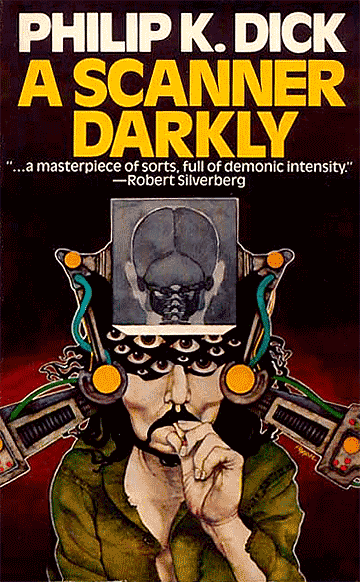 Philip K. Dick’s “A Scanner Darkly” is a science fiction novel that explores the American drug culture post-Vietnam war. Using his past experiences to highlight the main themes within the novel, Dick shares how drugs have negatively impacted not only his life but also the lives of many of his friends and acquaintances. Following the life of a man name Bob Arcter, the novel focuses on the struggles of drug addiction and one’s search for their identity. It also examines the influence and power of the government and the corruption and consequences involved in the drug industry. The novel also touches on the themes of paranoia, a lack of privacy and police surveillance in a technology-driven world.
 epidemic leads the government to enforce police surveillance that invades one’s right to privacy. The animated aspect adds to the darkness of the film. Through the use of special effects, the directors create a world of bleakness and paranoia which allows audiences experience the instability of a drug-induced state of mind. Touching on the novel’s main themes, the film explores the dangers of drug use and how the law inevitably plays a role in our lives because of it. Linklater’s use of rotoscoping produces characters that are both human and inhuman, adding a sense of realism into the film. The visual aspects successfully separate the film from the novel but stays true to the original source.
 is still present in the lives of many Americans. Linklater’s use of visual effects renders a feeling of discomfort and uneasiness, similar to the novel’s reading. The film does well in capturing the differences between one’s sober, true self and one’s mind-altered, drugged self. The blending of live-action performance with rotoscoped animation offers a good depiction of the fears and anxieties expressed throughout the novel. The film
  her than a disease and compares addicts to “children playing in the street.” In other words, addicts do not play a vital role in society and it’s their responsibility to change their ways and create their place in it. Dick’s novel highlights the carefree and reckless lifestyles of many people living in California who are lost in the world of excessive drug use, which acts as a contrast to Hollywood’s charm and attraction. Scanner Darkly reflects the “California state of mind” through the understanding of one’s loss of identity, increase of paranoia and consequences of drug use.
 thy’s No Country for Old Men is a chilling thriller about a murder investigation involving three prominent characters; Ed Tom Bell, a sheriff, Llewellyn Moss, a hunter, and Anton Chigurgh, a psychopathic killer. In a town where greater violence requires greater law enforcement, a drug-related massacre calls into question how greed, revenge, and pride begin to shape the morality of three divergent individuals. McCarthy’s violent and suspenseful novel examines the lives of a good and bad protagonist and a middleman who struggles to navigate in between them. No Country for Old Men highlights the themes of chance, freewill, and fate and how these factors play a role in determining the life and death of the characters within the novel. McCarthy’s dismissal of proper punctuation forces readers to focus on the story’s action and events, giving off a sense of urgency throughout the narrative.
 he significance of the novel’s time and setting. The high-tension and action-packed scenes examines the role of weapons, violence, and death in modern American culture to signify how changes in society cause tension between the young and elderly in their attitudes and modes of thinking. The film is successful in the portrayal of its characters as straight-faced and stoic men who stop at nothing to do what they believe is right and just.
 initively. In some respect, it can be considered a happy ending because it shows that Bell has reached a level of realization in accepting that his ambitions were too great for him to achieve. Although there are many ways to interpret it, the ending is unique because it allows viewers to decipher the meaning for themselves. The ending line, “And then I woke up,” signifies a moment when Bell reaches a moment of truth. Viewers may feel uneasy about the film’s ending due to its abrupt closing which offers no closure or reassurance. The ending works because it does not provide a climactic sanctification and it leaves viewers wondering if things get better for Bell or if he continues to be haunted by his dreams. Ending the scene unexpectedly with no resolution works because it symbolizes that within the movie, and in life, the events that follow are uncertain and happy endings are not guaranteed. Joel and Ethan Coen’s adaptation is faithful to Cormac McCarthy’s work but still offers an interesting twist to highlight the significant themes explored within the novel.
 ased on a comic and also a film based on the real lives of the people who created the film and the story. American Splendor captures the mundane and arbitrary tasks of everyday life, allowing viewers to sympathize, relate to, and examine their own dark moments and idiosyncrasies. The blending of animation, acting and director scenes added a unique element to the film, also staying true to the faithfulness and authenticity of the original work. The film shows how the story of the comic was developed, how the writers may have felt, and how it was produced into an on-screen moving picture. The adaption does a good job connecting audiences to the voice of the writers, actors, and producers to the illustrations within the pages of the comic itself.
 y themselves were more interesting than the characters portrayed by the actors because they offered a more genuine understanding into the writer’s world as well as a greater insight into the movie making process of the film’s production. Although some scenes and voice overs may have been somewhat scripted, the scenes with Harvey Pekar’s himself allowed viewers to get a better depiction of his personality and way of thinking. The moments of story line explanations coupled with the stream-of-consciousness style of narration was entertaining and, it incorporated elements of realism which brought viewers closer to the writer’s voice.
 The Adaptation is a film with multiple meanings; the adaption of the novel The Orchid Thief becoming a screenplay and the adaption of a character becoming a man within the film. Aware of it’s own unconventional form, the Adaptation explores topics of evolution, depression, love, artificiality, movie making and the Hollywood industry in general. As Nicholas Cage struggles to transform Orlean’s novel on screen, Meryl Streep plays Susan Orlean who struggles to understand John Laroche and his theories on life. It criticizes Hollywood conventions and screenwriters who deviate from an original work for an easy cash prize. Similar to the novel, the film is centered about the adaption and growth of an individual as they navigate their way through life’s obstacles.
 The film reflects the pleasures of writing to be a creative form of expression; in this case, Donald’s understanding and interpretation of a highly acclaimed and respectable novel, The Orchid Thief. It shows how writers seek to have a voice while striving to stay faithful to the original story. On the the other hand, the film also reflects writing to be a peril because it involves a great deal of time, patience and understanding. Writers often face the burden of insufficiency when trying to develop their originality. Within the film, Charlie struggles to detach himself from the subjects of the movie while Donald’s obsession with the movie industry becomes problematic and ultimately, detrimental to his life and well being.
 on to the theories of absurdism and existentialism. Prominent themes throughout many of his novels and essays explore the meaning of life and whether or not there is a purpose for the human existence. Within his novel, “The Fall”, readers are introduced to a narrator named Jean-Baptiste Clamence, a former lawyer turned judge-penitent. He addresses an unidentified audience in a 20th century bar in Amsterdam, engaging in a one-sided dialogue with a stranger who is also believed to be a former lawyer from Paris around the same age of forty.
 The primary location will be set in a bar called “Mexico City” in Amsterdam. The era is during a time after World War II with flashbacks to a time in Paris before the war. A slow pan of a run-down, dark and gloomy city will introduce the film’s opening. Audiences will watch Clamence get off of a old and dirty bus on his way to Mexico City. A line of taxis crowd the roadways and newspapers are littered along the polluted sidewalks that looks uncleaned for days. But as soon as he enters the bar, Mexico City will be a promising oasis.
 Velvet table cloths, jovial music, and a contrast of beautiful colors will generate an entirely new atmosphere compared to the streets behind the doors of Mexico City. It is important to note that the juxtaposition of the bar and Amsterdam is symbolic of Clamence’s desire to seem modest but retains the need to feel superior by placing others beneath him. For the majority of the narration, Clamence will be at the bar, with a drink in his hand, sitting next to an honest looking man who seems content in his own company before Clamence’s arriving. When Clamence talks about his glory days before the war, viewers will get a glimpse of his extravagant lifestyle during his prime time in Paris; flashy clothing, young, successful, wealthy, and beautiful and a hit with the ladies. Audiences will also see flashbacks of his acts of kindness; walking a blind person across the street, helping a widow with the nuisances of court proceedings and serving a orphan who has no place to live. These scenes will be completely disregarded after audiences see Clamence cross the Seine River Bridge and ignores a women fall into the water. After this incident, the flashbacks will be haunted with an aura of gloominess. The film will cover five days of Clamence’s life through five different locations but with greater emphasis on his encounters to reveal important sides of his personality.
 ent besides Clamence and the aftermath of the gruesome noise hitting the water near the bridge. He does not see her but clearly hears something that could only be made by a human body. But instead of investigating the occurrence, Clamence makes no attempt to become involved in her rescue. He ignores his suspicions and continues walking. Over the next few days, Clamence avoids newspapers and any indication of death reports and stories revolving the previous incident. Despite his intuition, he successfully blocks out that memory and continues on his daily routine.
 s, depression is depicted as a mental illness that is not only bleak but also unique to the circumstances of the individuals involved. In other words, although it is understood under the same title, the conditions and degree of its suffering ranges throughout. Each woman copes with their depression in their own ways. For instance, Laura must leave her family to find her own identity and Clarissa must let go of her past to live a better future. Similarly, the lives of these characters are intertwined to show that humans are connected throughout their lives and circumstances.
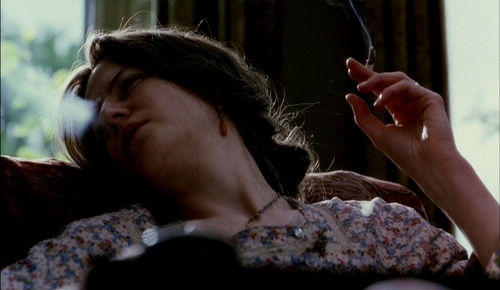 ate of dread or extended grief. Within the movie, the title is significant to the theme of mental illness in individuals who deal with ongoing battles within themselves and the society they live in. It suggests that for some, hours may feel like days or years, and the terror of having to face those hours is what may lead some to develop greater forms of anxiety or act in an extreme manner, such as suicide. Similar to the time it took for the film’s making, the title may also suggest that it may take a long time for viewers to really comprehend and take in the major themes of the novel and movie. Moreover, mental illness is not simply a “one-and-done” depiction but an on-going battle and topic of discussion that requires “hours” to fathom and better understand.
